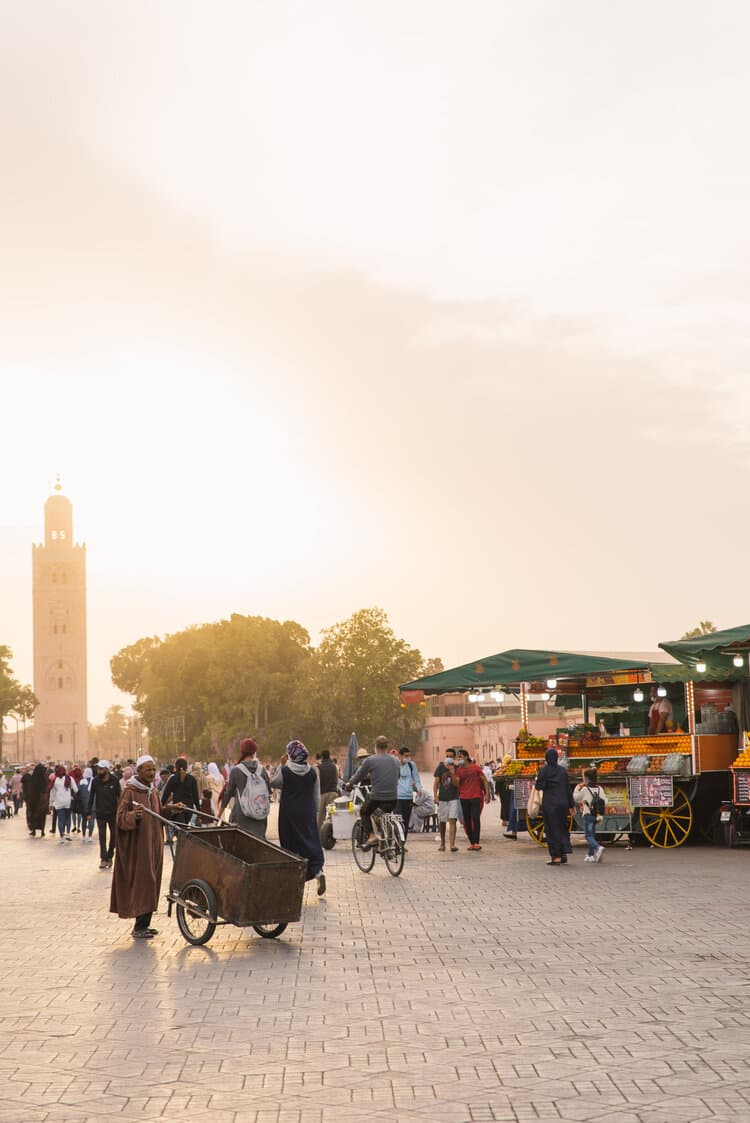
Yes, Morocco is safe
Morocco is one of the safest and most stable destinations in Africa and the Arab world, and it welcomes millions of tourists every year. Violent crime against travellers is very rare. What you will find — as in any major tourist city — are small scams and pushy vendors, especially in the medinas. With a bit of common sense, you'll have no problems.
The most common scams (and how to avoid them)
- "Fake guides": someone offers to take you to a "closed" spot or show you the way and then asks for money. Decline politely and carry on.
- The tannery souk: they "walk you" to a terrace and then demand a tip. Ask the price of everything beforehand.
- Taxis with no meter: always agree the fare before getting in, or ask them to run the meter.
- Photos with monkeys or snakes in Jemaa el-Fna: they charge you for the photo. Best avoided, also for the animals' welfare.
The best way to skip all of this is to travel on an organised tour: with your own guide and private transport, scams simply don't happen.
Women travelling
Many women travel through Morocco alone or in groups without incident. You may get the occasional compliment or look, but it rarely goes beyond that. Dressing a little more covered (shoulders and knees covered) reduces attention and shows cultural respect.
Health and water
No vaccines are required. Always drink bottled water, avoid ice in dubious places and be careful with salads at street stalls in the first few days. Carry a basic first-aid kit with something for your stomach.
Quick tips
- Keep a digital copy of your passport and travel insurance.
- Carry some cash in dirhams for small purchases and tips.
- In the medina, walk confidently even if you get lost — getting lost is part of the experience.
- Get travel insurance with medical cover.
In short
Morocco is a welcoming, hospitable country. With the basic precautions of any trip, you'll enjoy an unforgettable experience. If you'd rather have total peace of mind, we organise your trip from start to finish.